
Medical Units · Multi-hospital
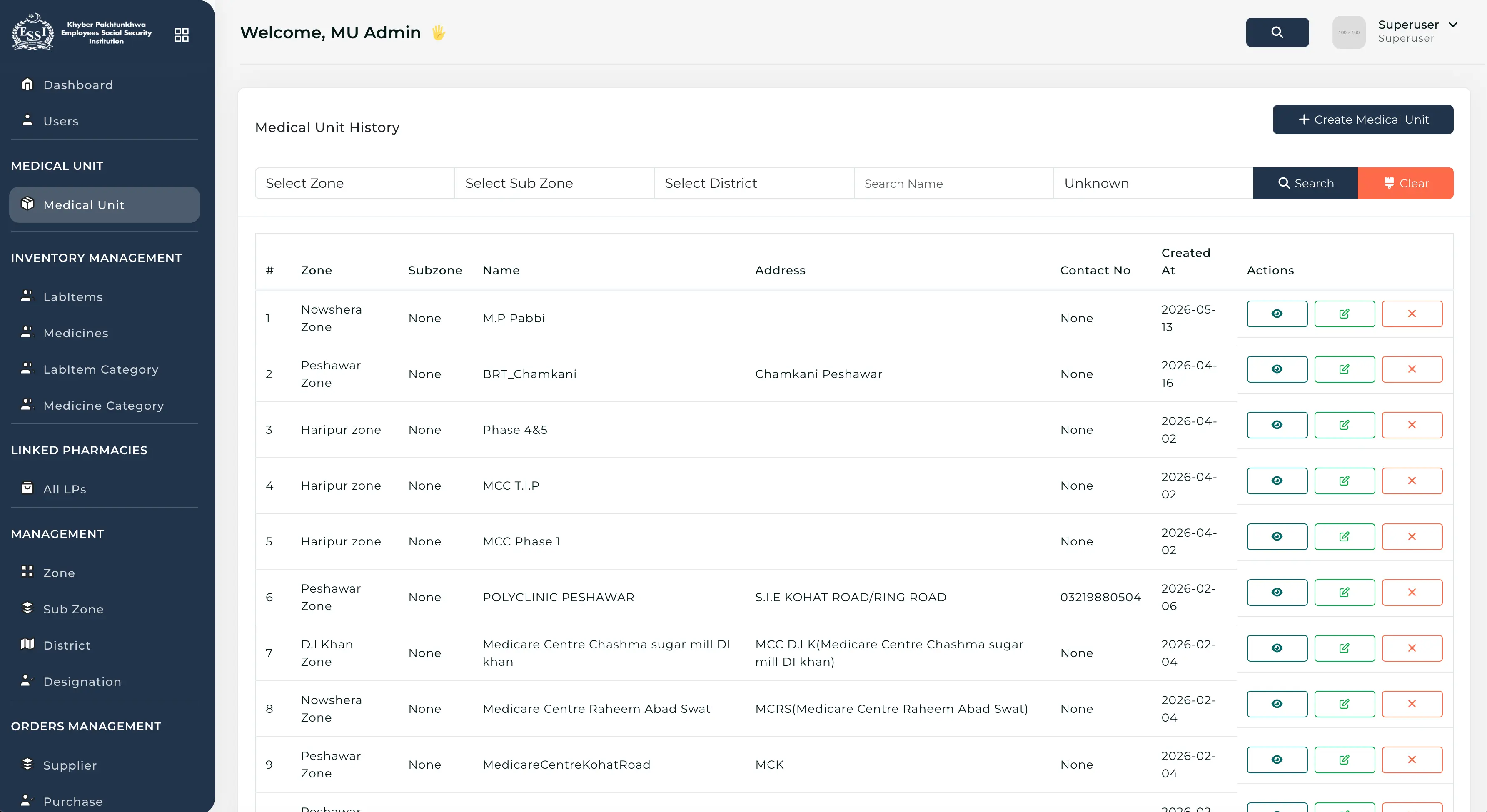
Standalone systems: Each hospital ran its own standalone records, so the institution had no central view of units, staff or activity across the province.
Multi-hospital platform for KPK ESSI connecting every role across prescriptions, pharmacy and lab.
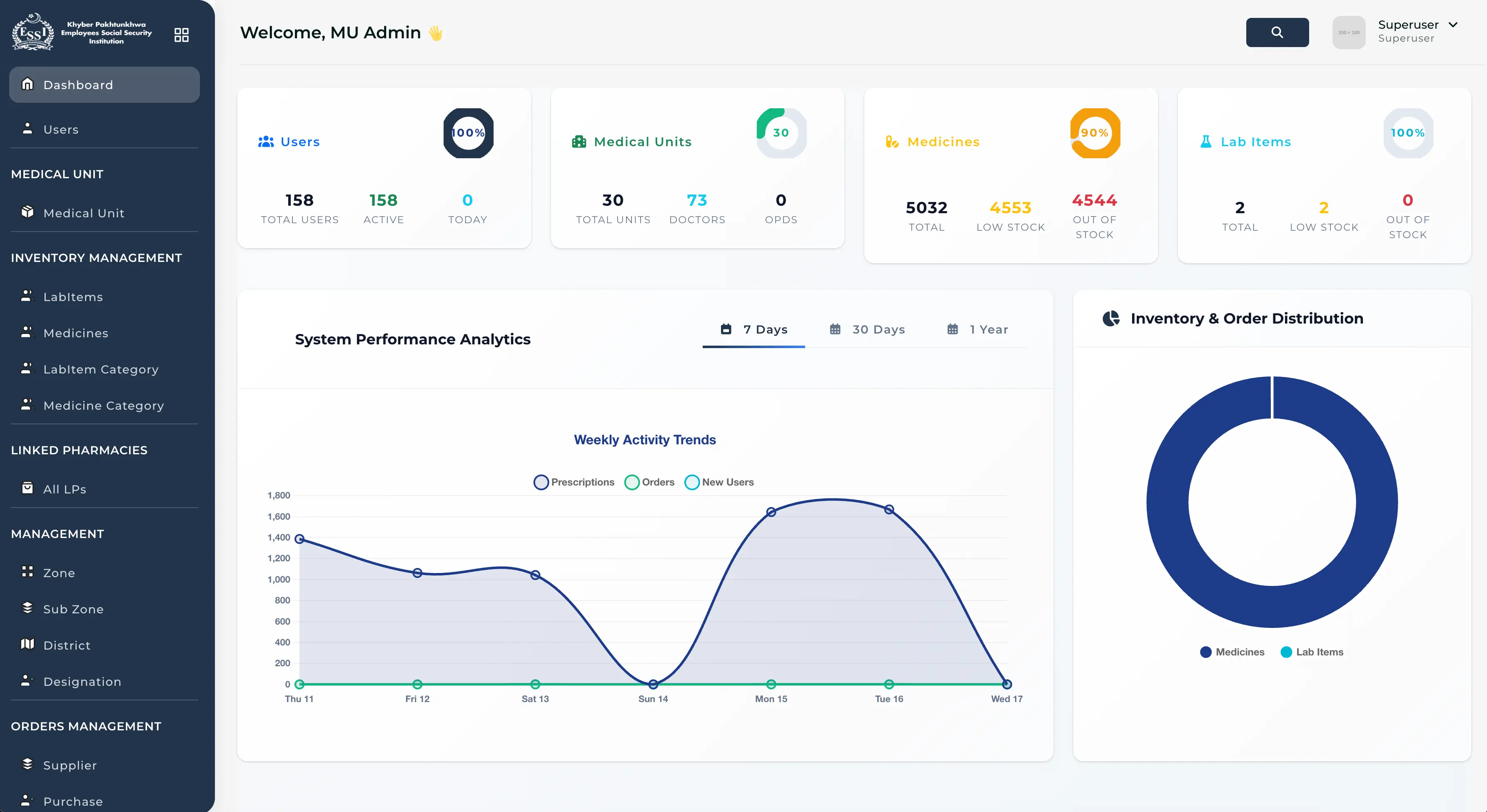
Overview/ 01
One secure platform for super admins, doctors, pharmacists, lab staff and linked pharmacies.HMIS is a unified Hospital Management Information System for the KPK ESSI, connecting multiple medical units and every role into one secure platform: super admins, unit admins, doctors, pharmacists, lab technicians, receptionists and linked external pharmacies.
Scope & deliverables
System architecture, role matrix and workflows across every hospital module.
A role-based design system tuned for doctors, pharmacists and lab staff.
A fast, responsive portal with real-time dashboards and dense clinical tables.
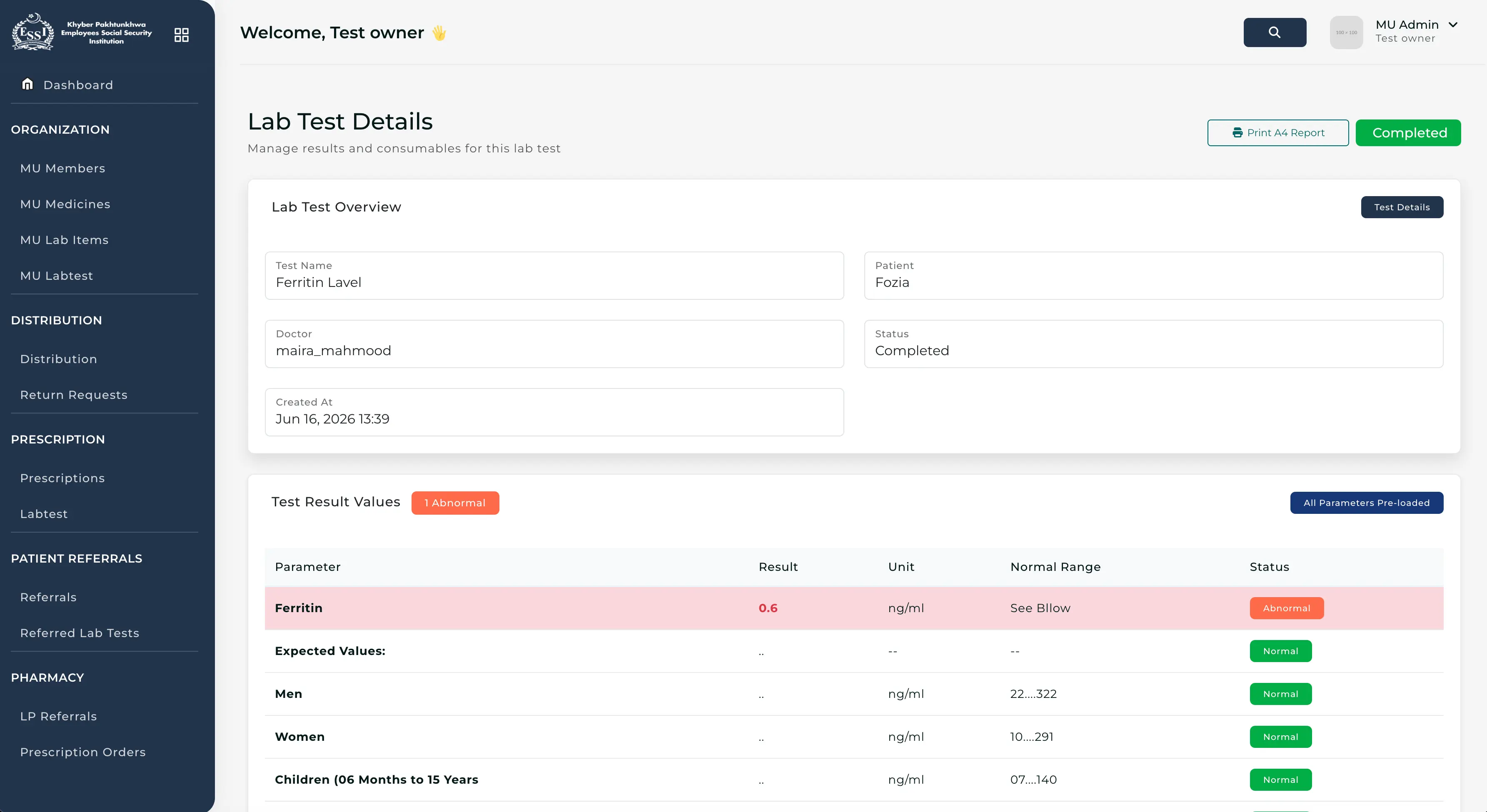
Secure APIs, role-based access, pharmacy, lab and linked-pharmacy flows.
Challenge & solution
Each hospital ran its own disconnected system with shared logins, no central control, no role separation and no visibility across units.
Standalone systems: Each hospital ran its own standalone records, so the institution had no central view of units, staff or activity across the province.
Shared logins: Staff shared generic logins with no separation of duties, leaving clinical and pharmacy data exposed and impossible to audit.
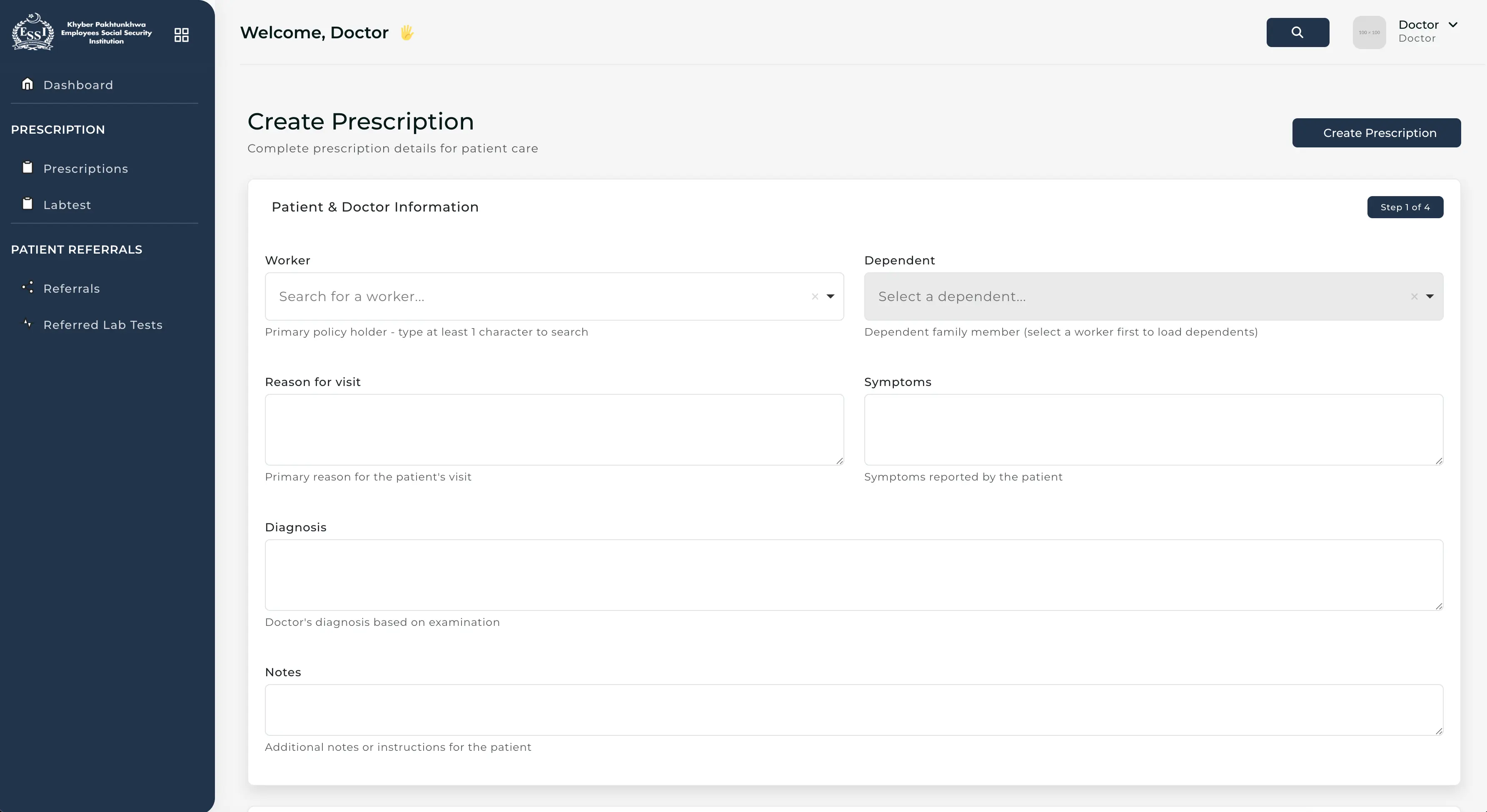
Paper scripts: Prescriptions were handwritten and lost between doctor, pharmacy and patient, with no tracking, history or order trail.
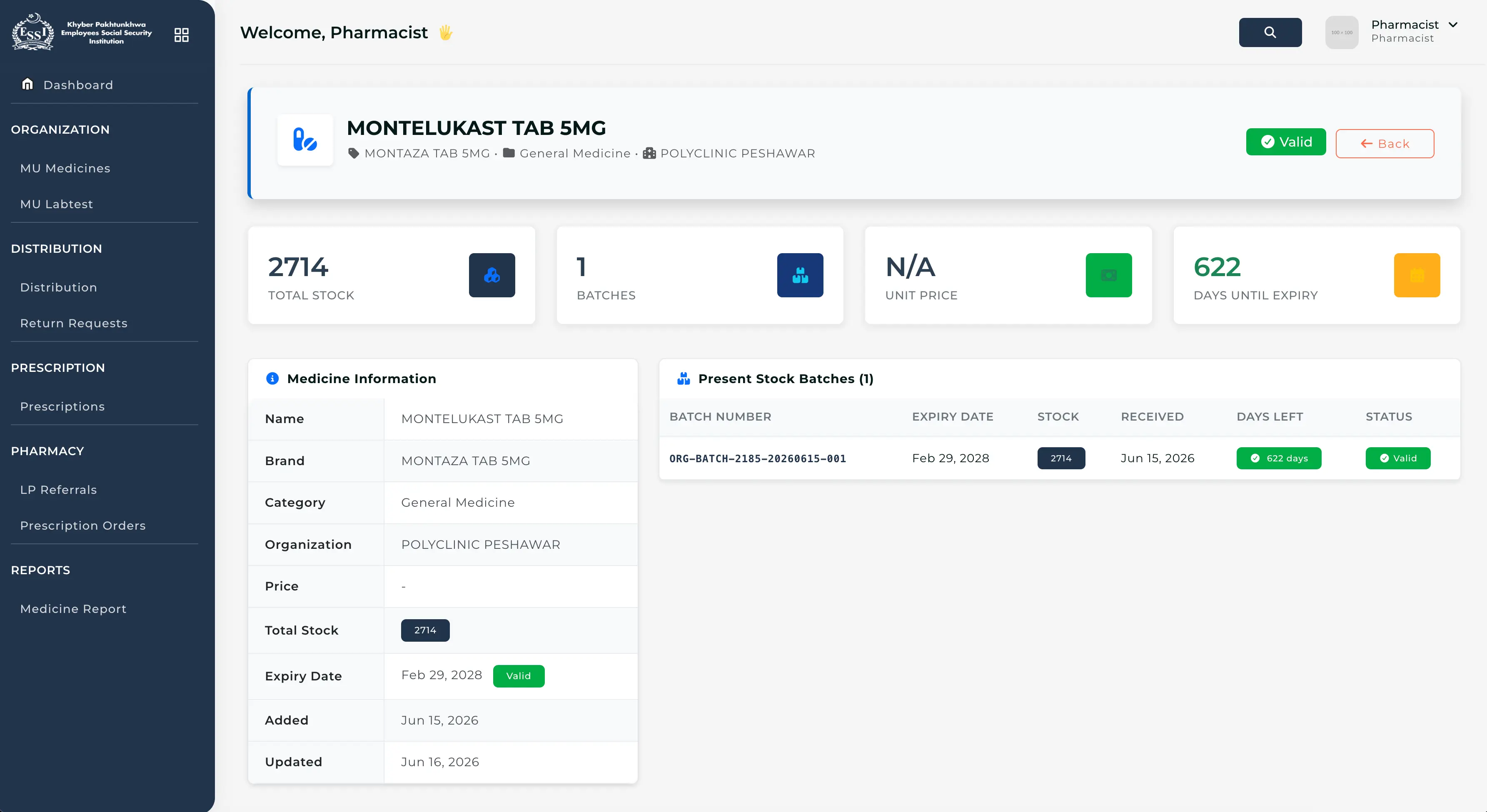
Manual stock: Medicine stock was counted by hand per hospital, so expiries, low stock and shortages went unnoticed until it was too late.
No shared platform
Fragmented systems
Detached labs: Lab orders and results lived in separate registers, so clinicians chased paper reports and patients waited for results.
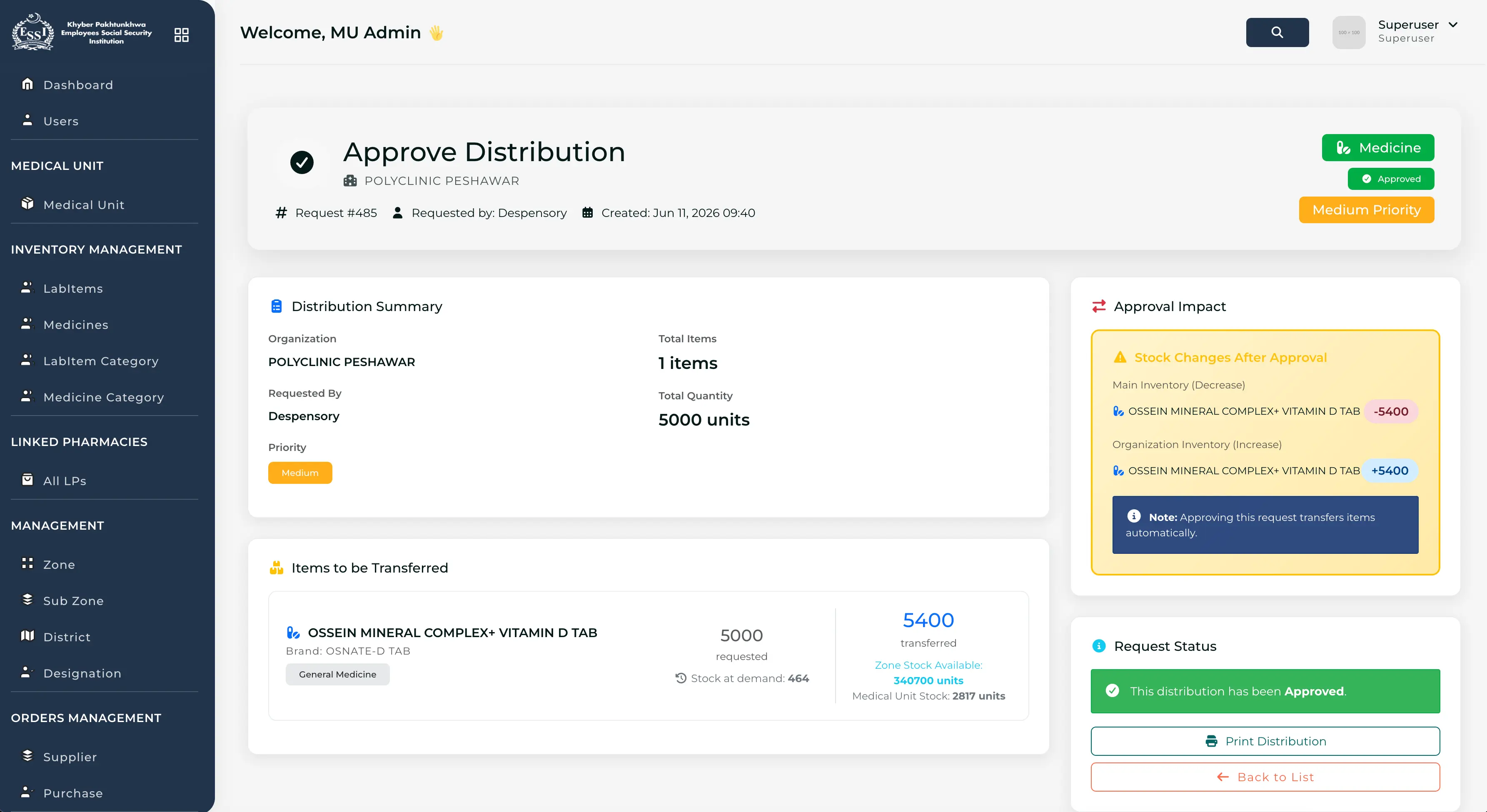
Untracked: Medicine moving between the main inventory and units was untracked, causing losses, disputes and no accountability.
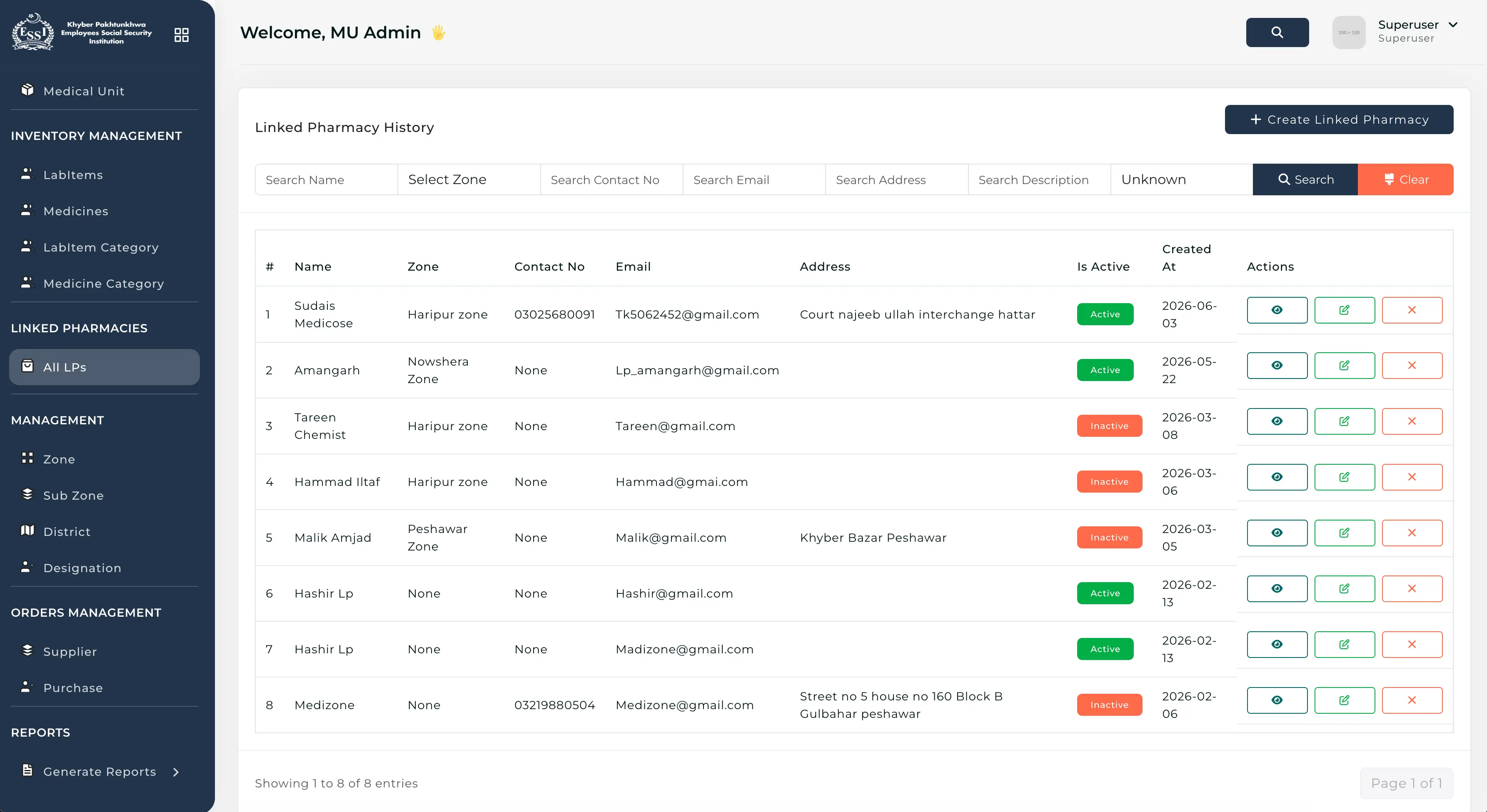
Off-system: External pharmacies operated entirely off-system, so referrals and dispensing outside the hospital were invisible to ESSI.
No insight: With data scattered across hospitals there was no way to report on activity, stock or performance institution-wide.
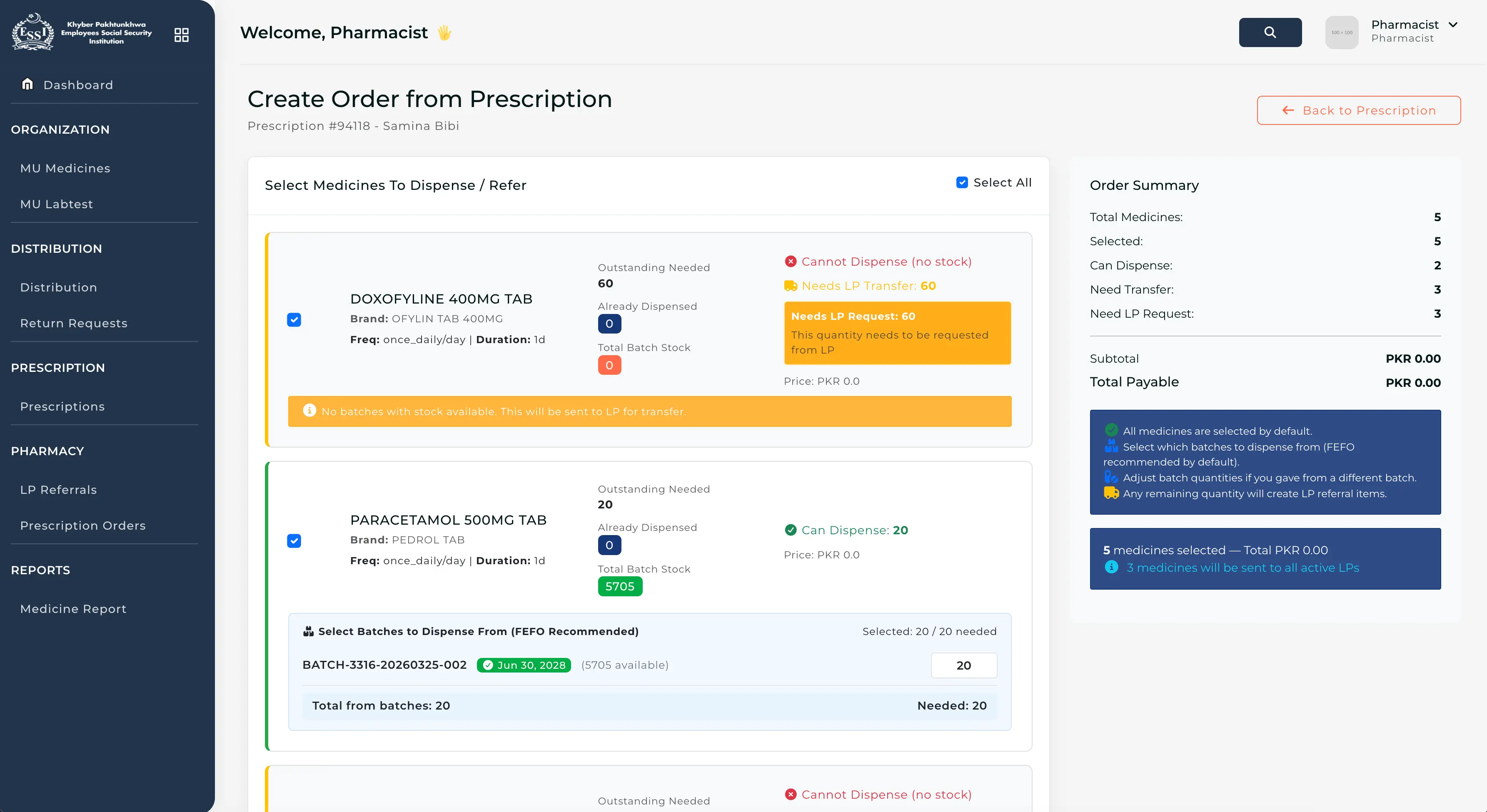
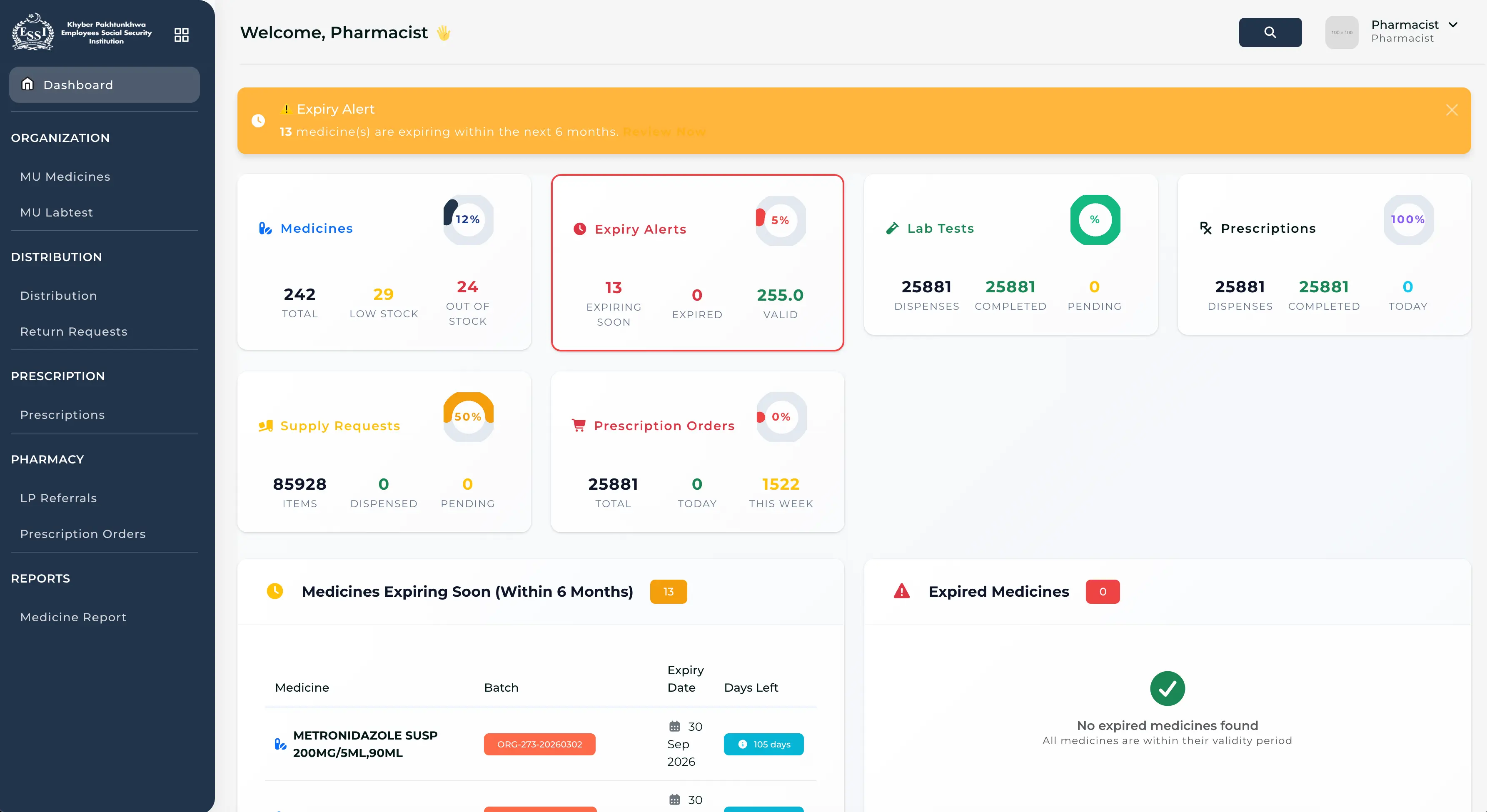
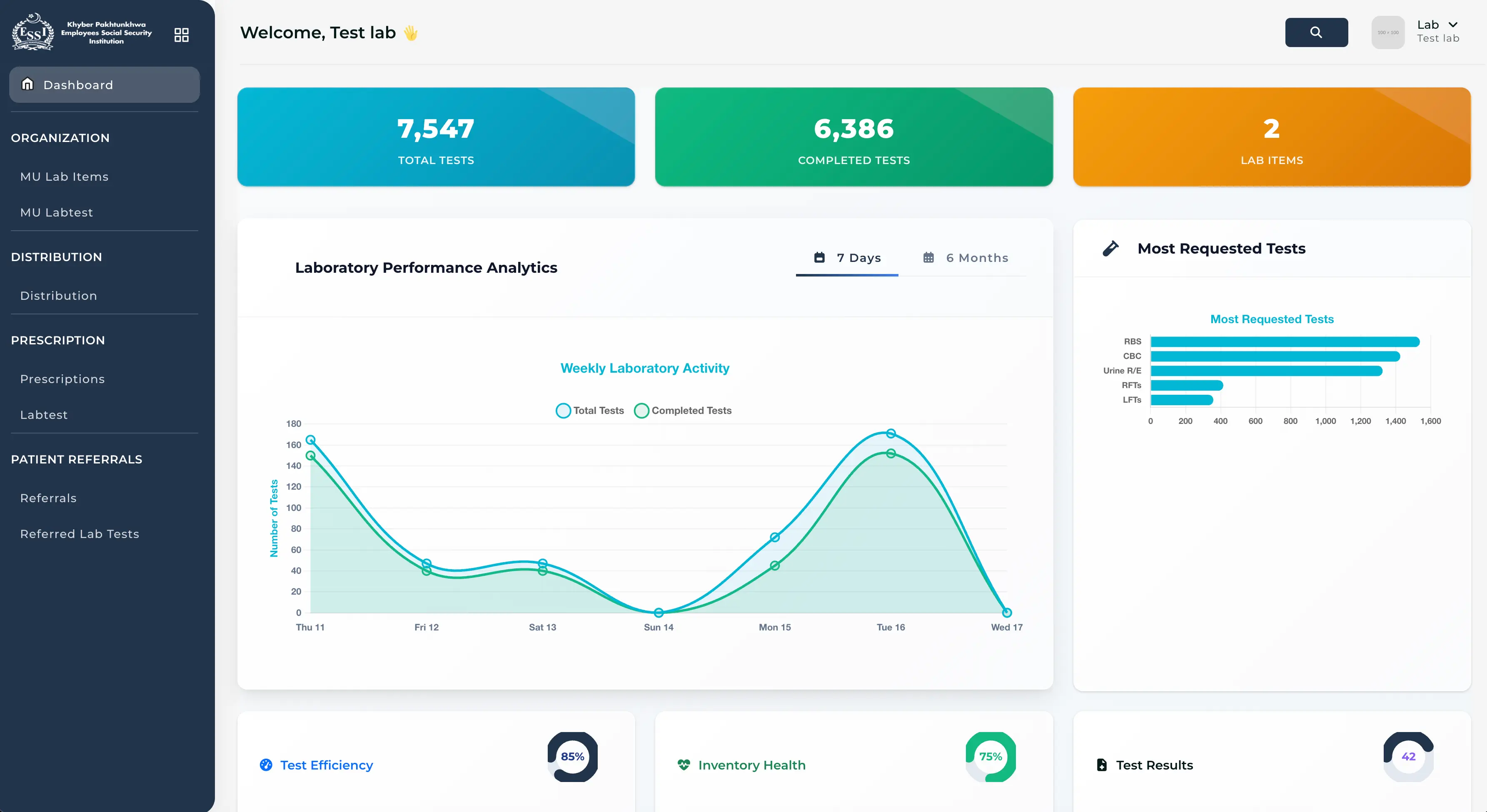
Focused workspaces for every hospital role inside the same secure system.From the super admin overseeing every hospital to the pharmacist filling a prescription, each role gets a focused workspace inside the same secure system.
Tap a product
Auto-playing. Hover to pause
Multi-Unit Super Admin
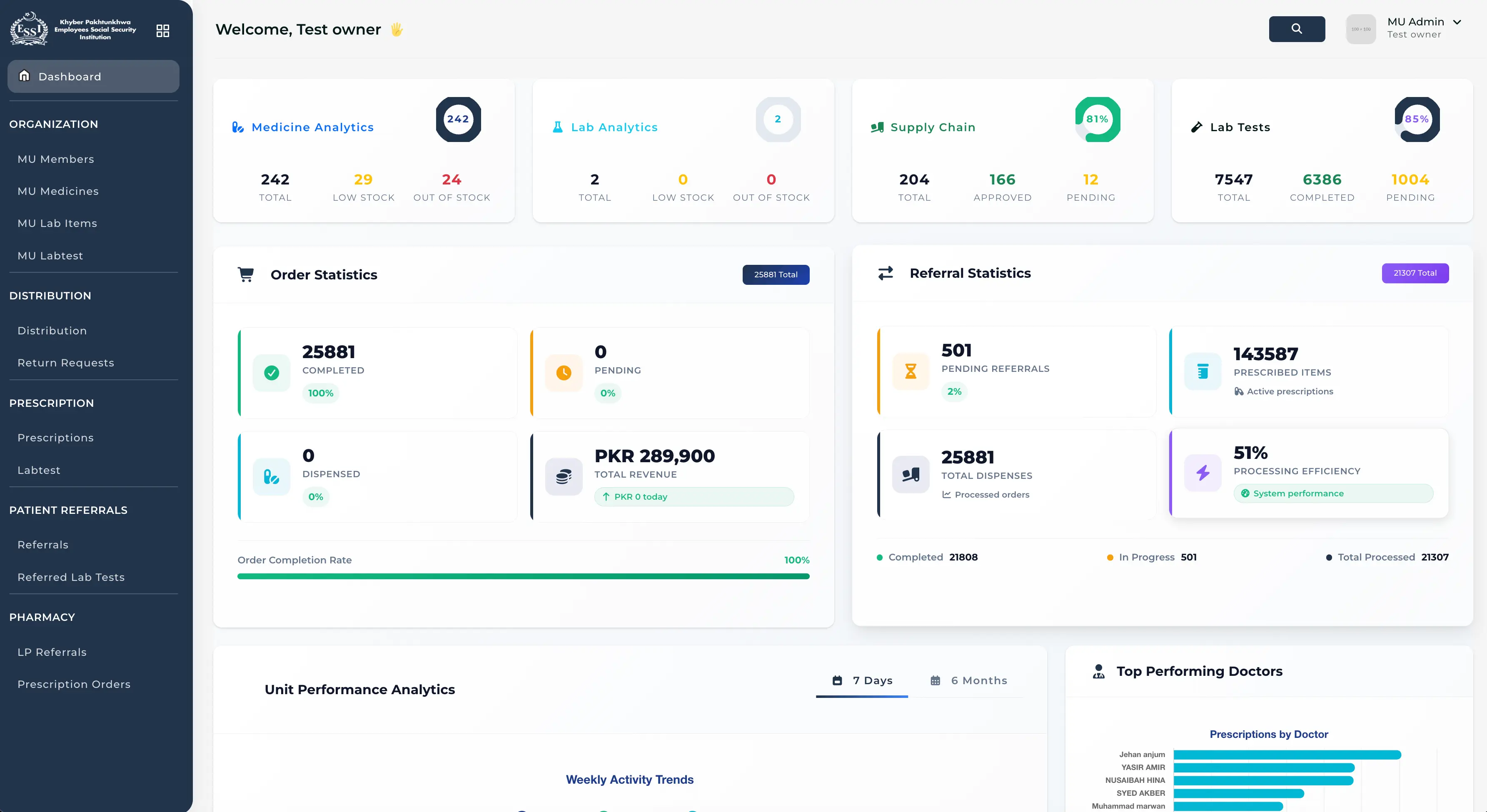
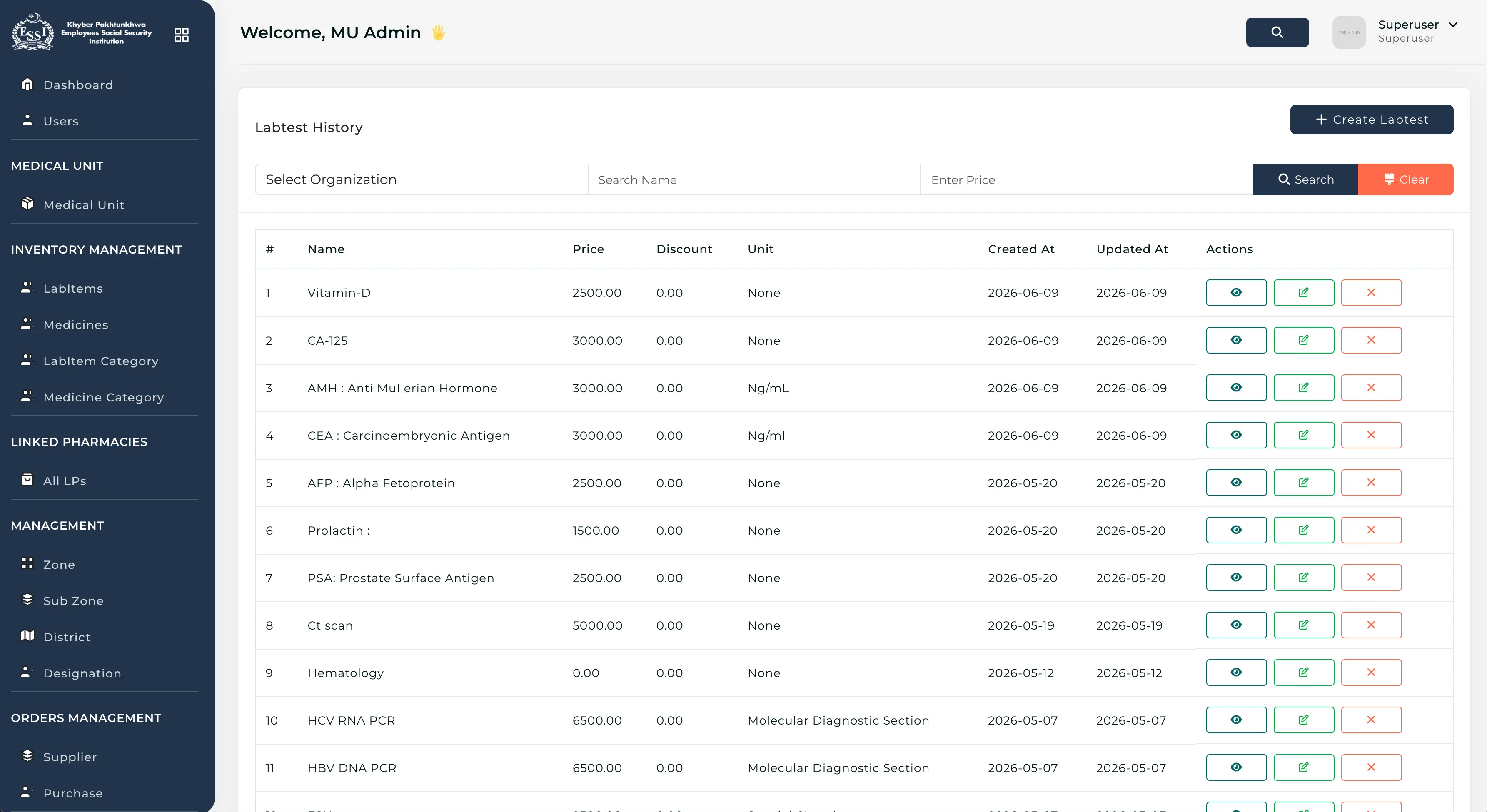
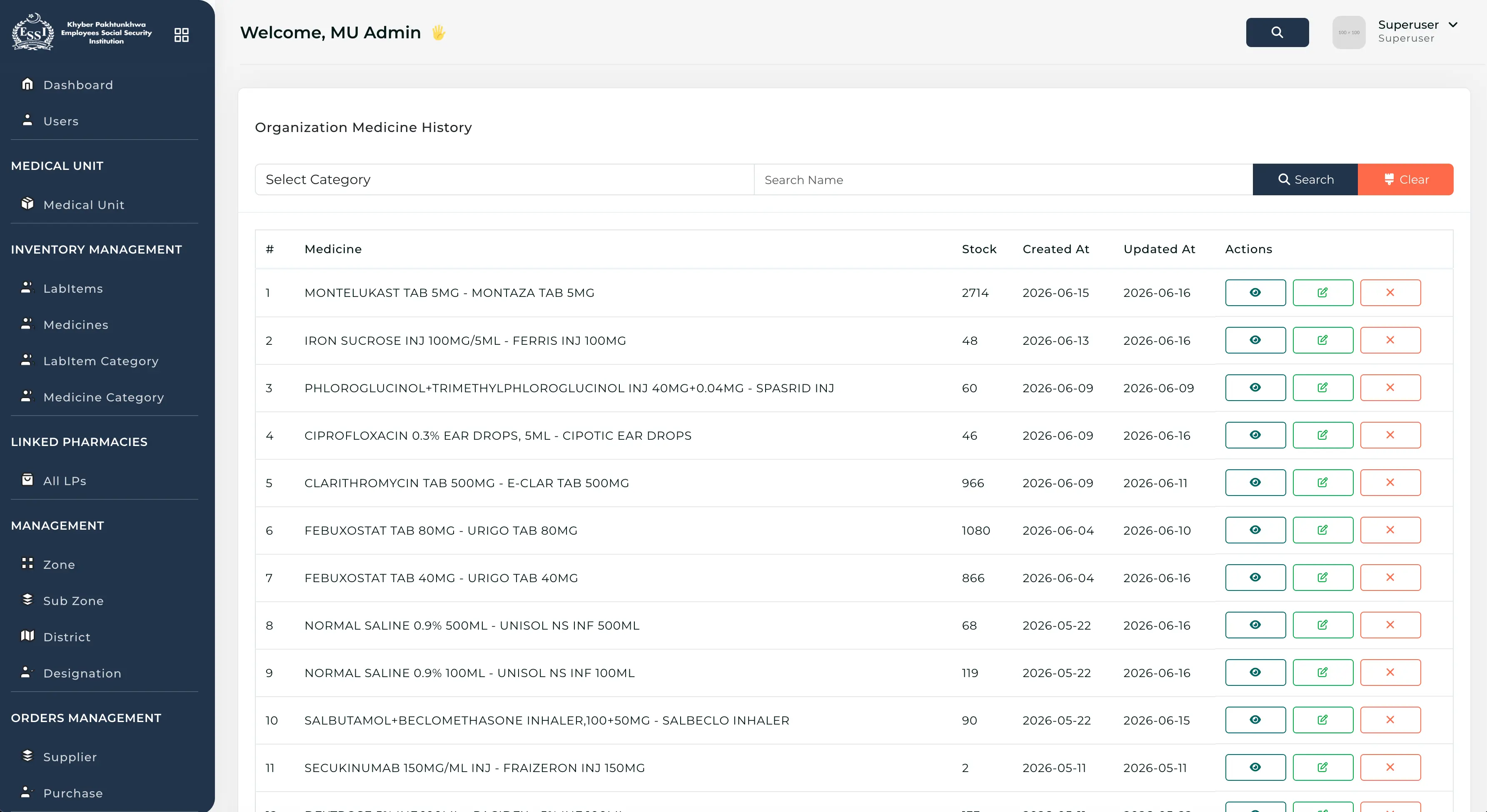
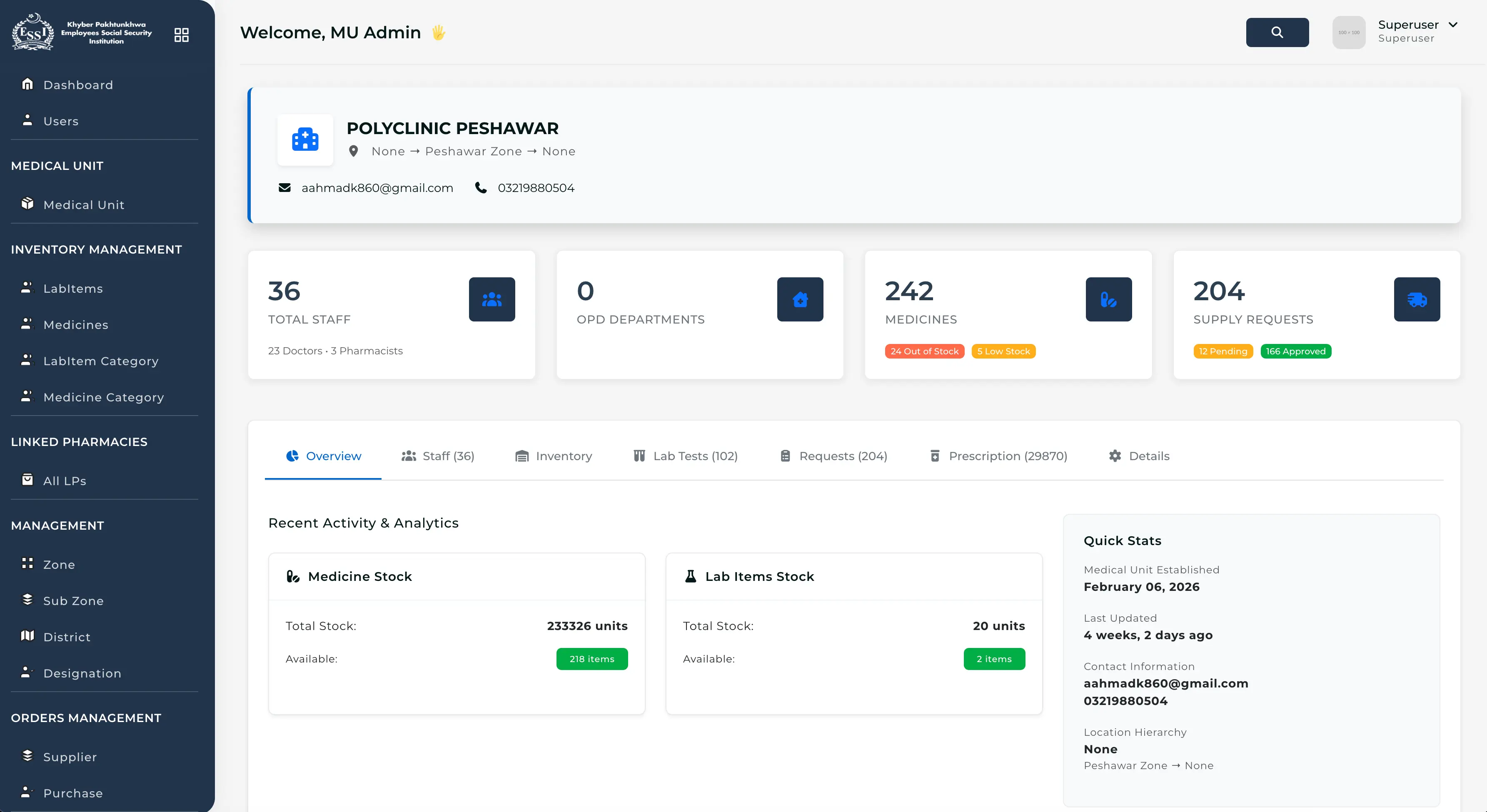
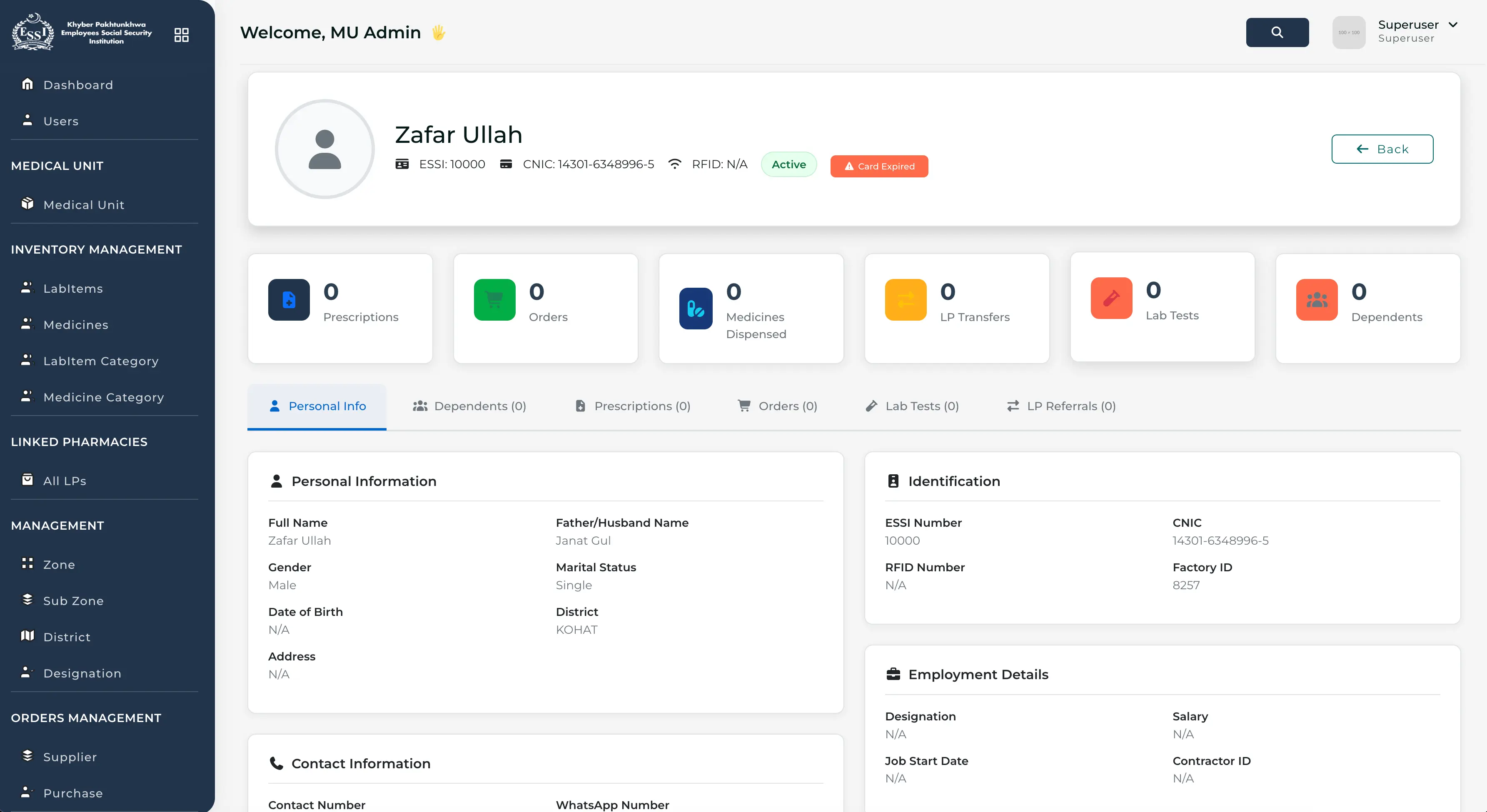
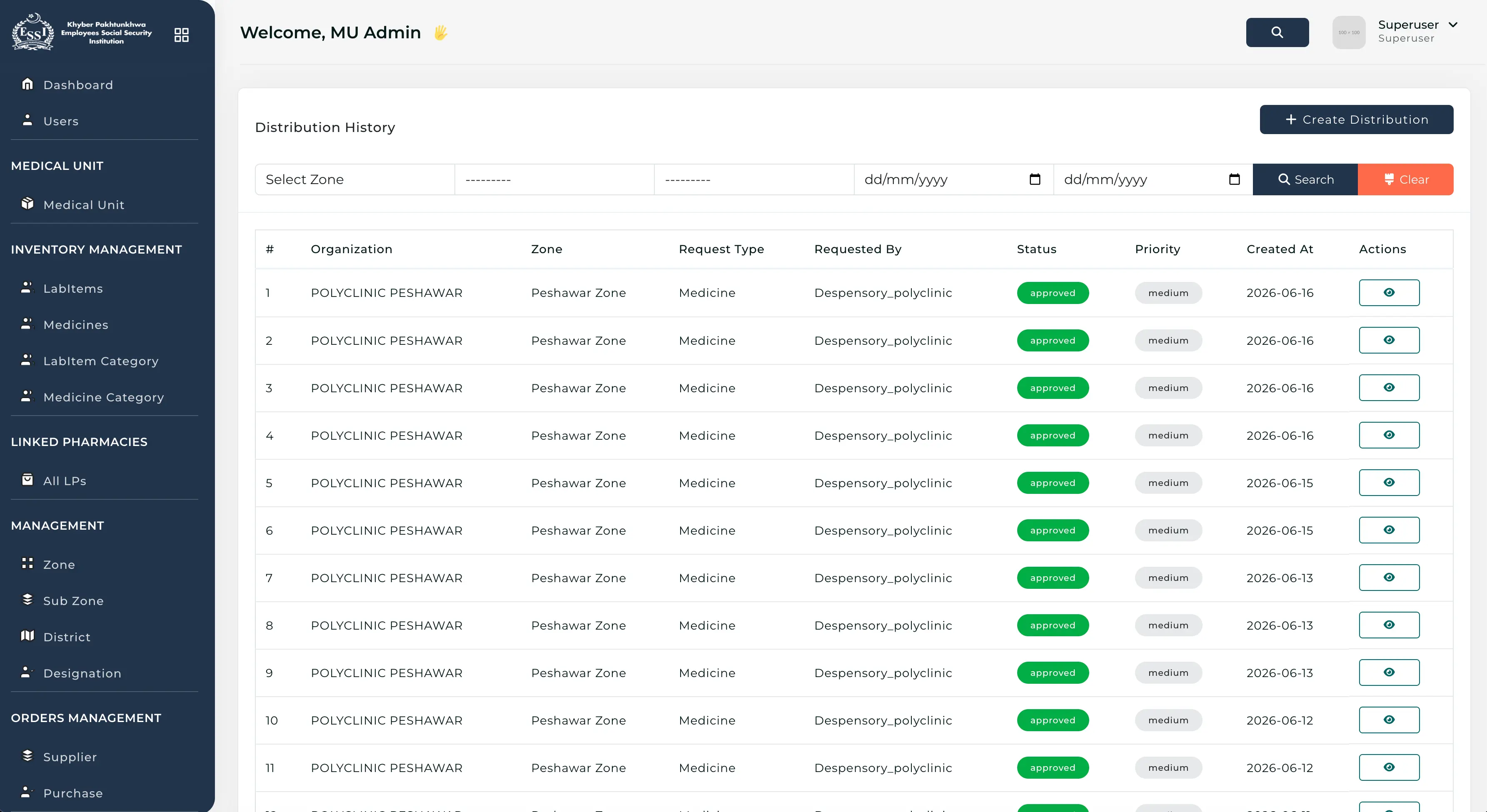
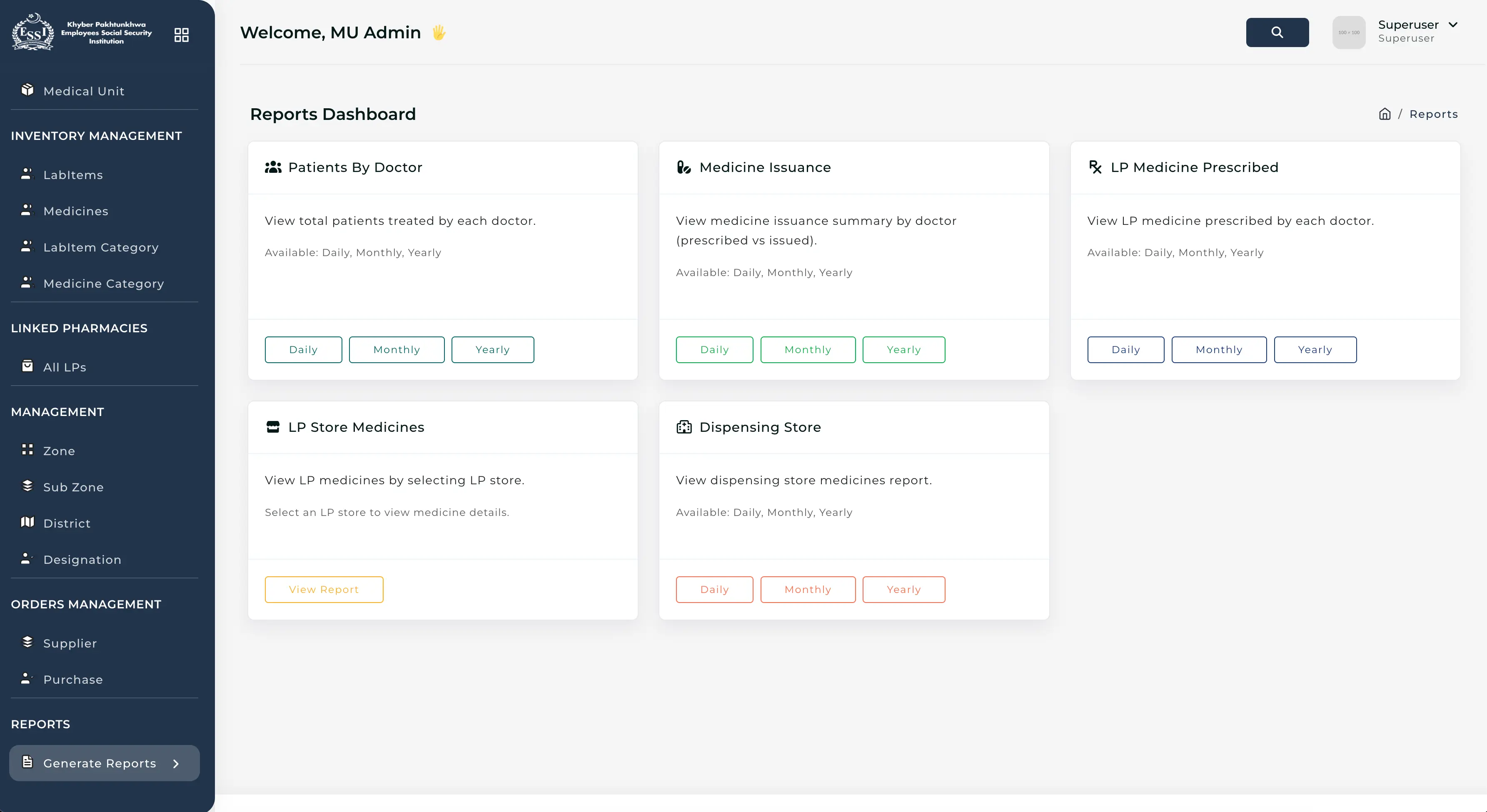
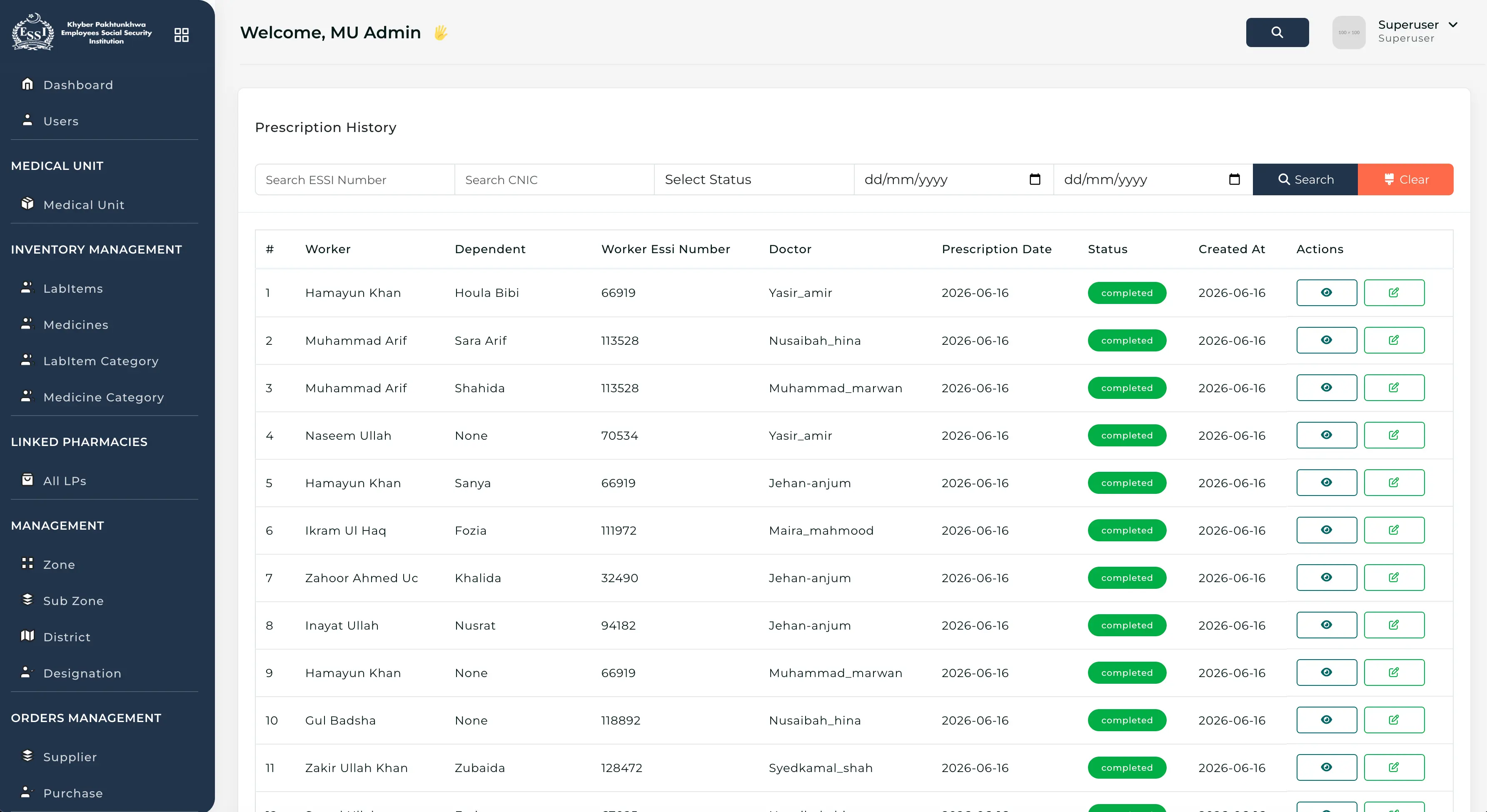
A super admin oversees all hospitals, users, medicines, lab items and orders across every unit in real time.
Engineering
Multi-hospital platform with prescriptions, pharmacy, lab and role-based access.Engineered to run many hospitals on one platform, prescriptions, pharmacy, lab, distribution and linked pharmacies, all role-based and secure.
Stack
Product Screens
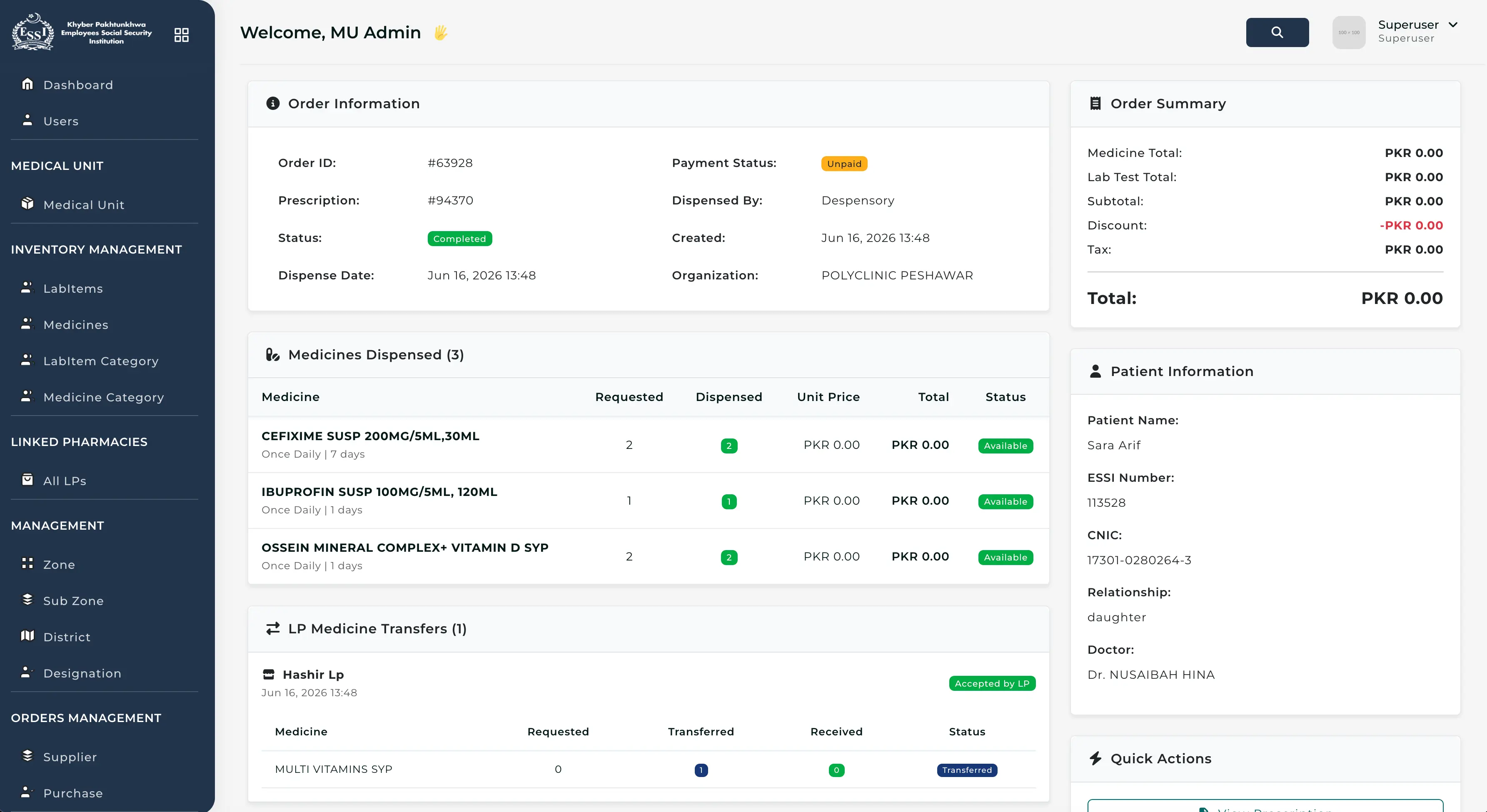
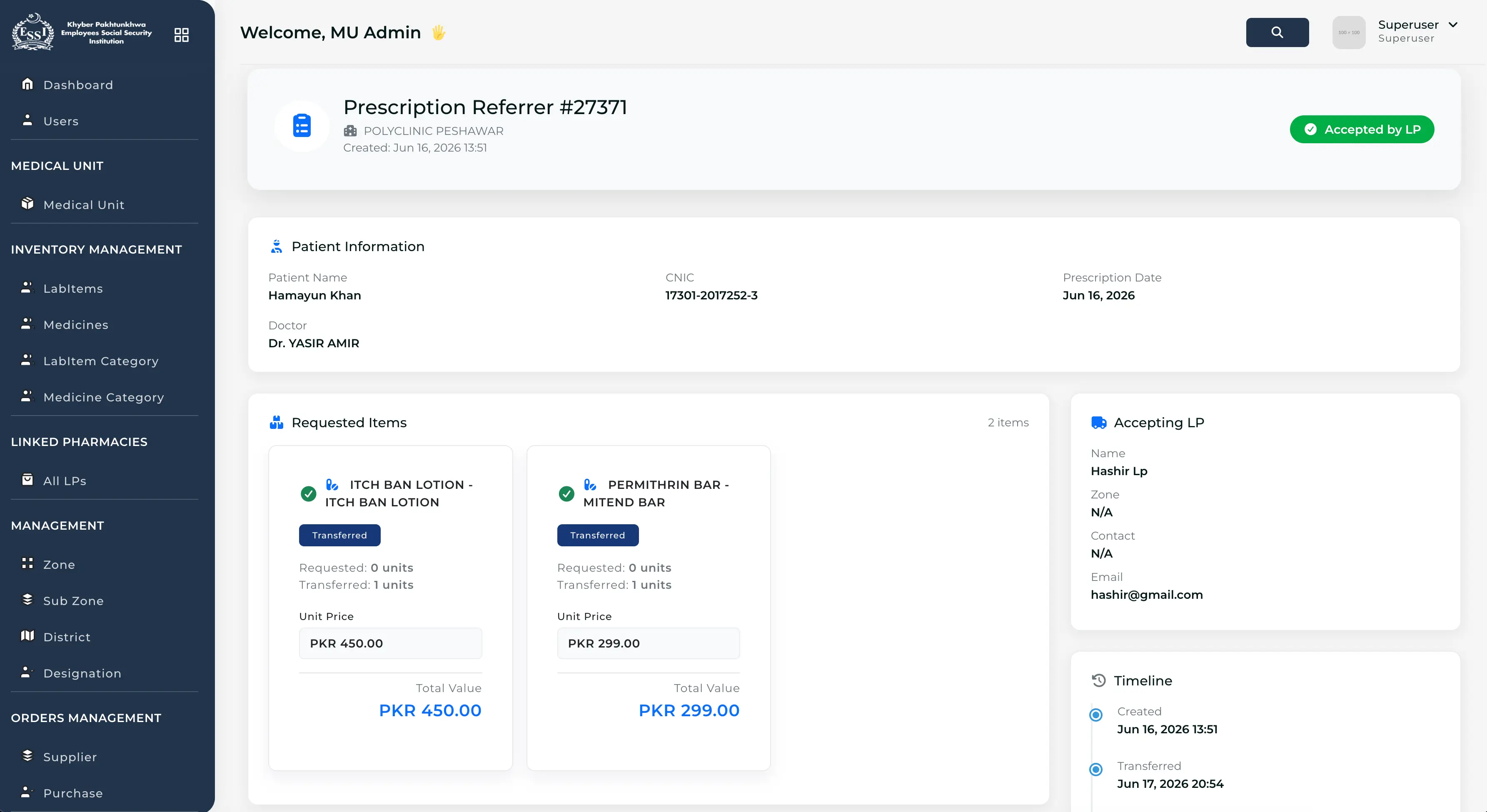
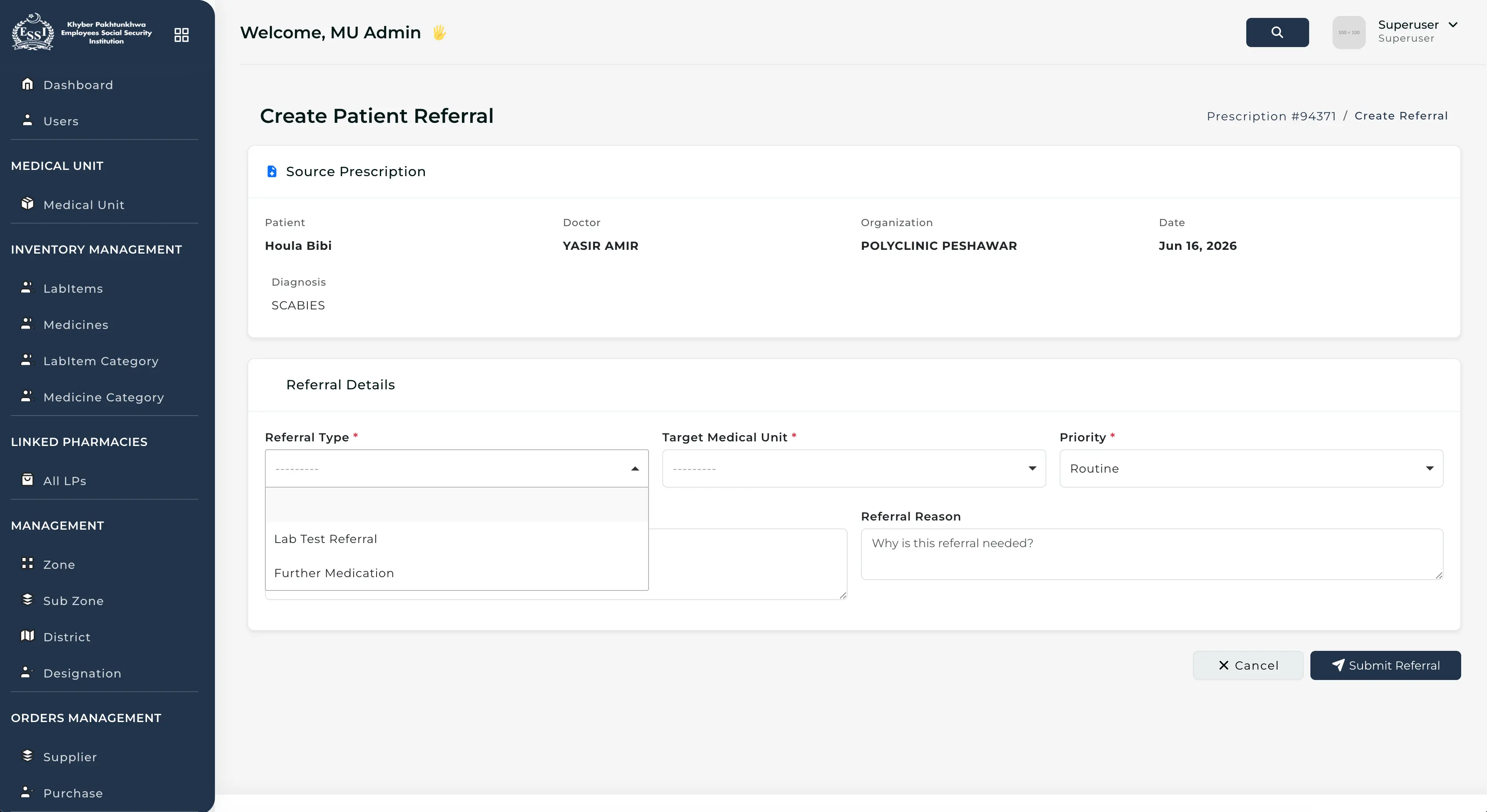
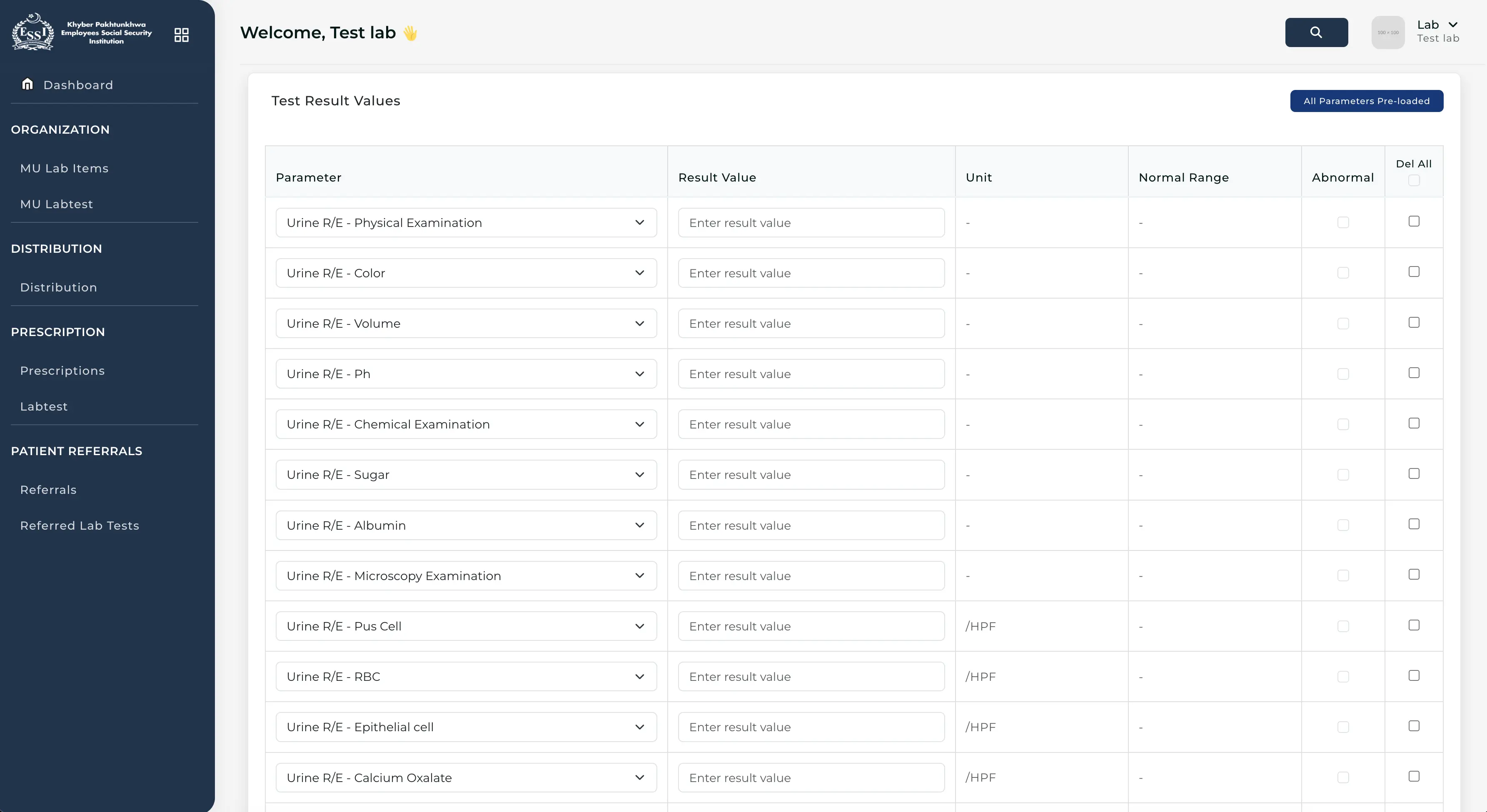
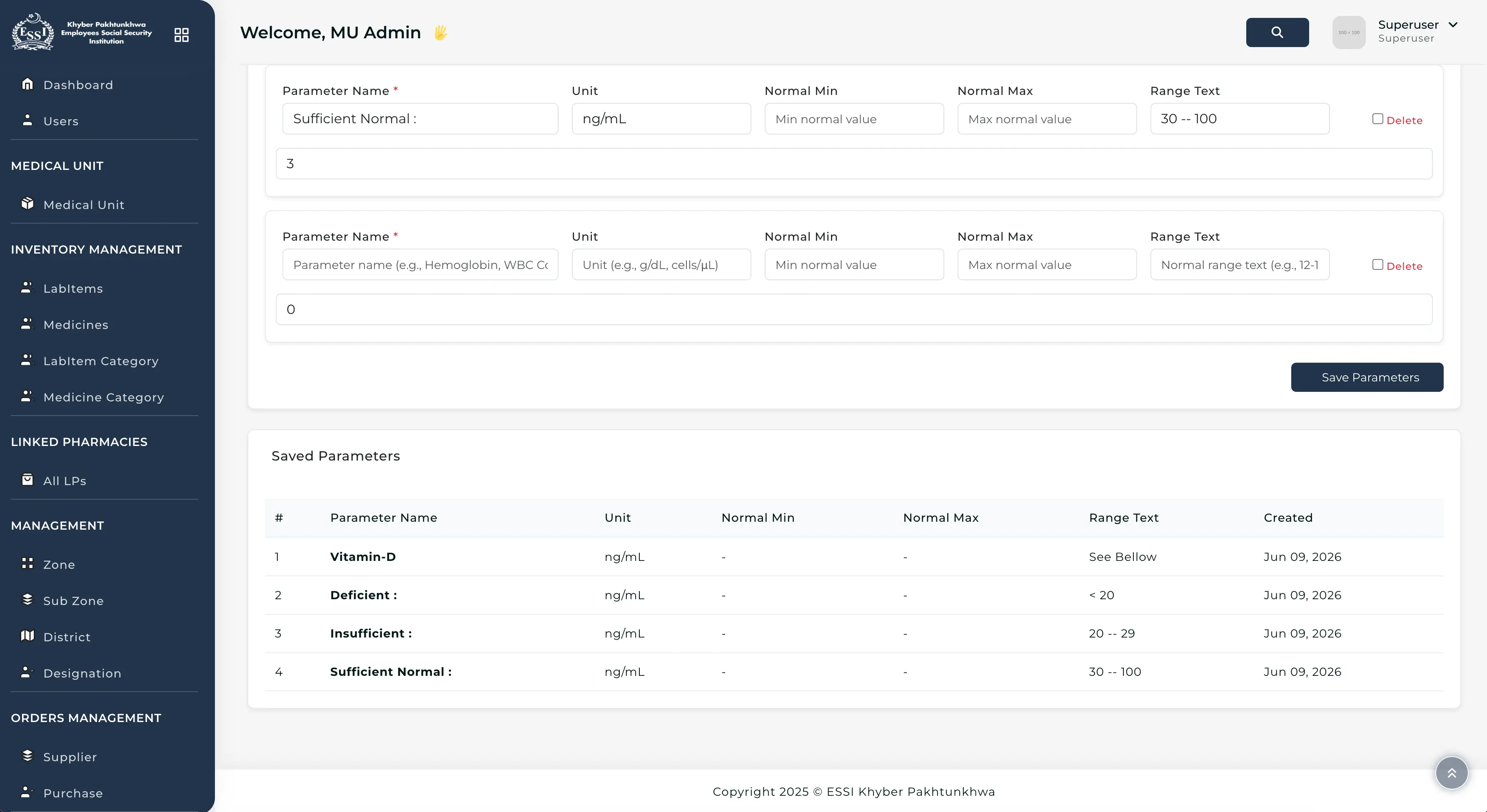
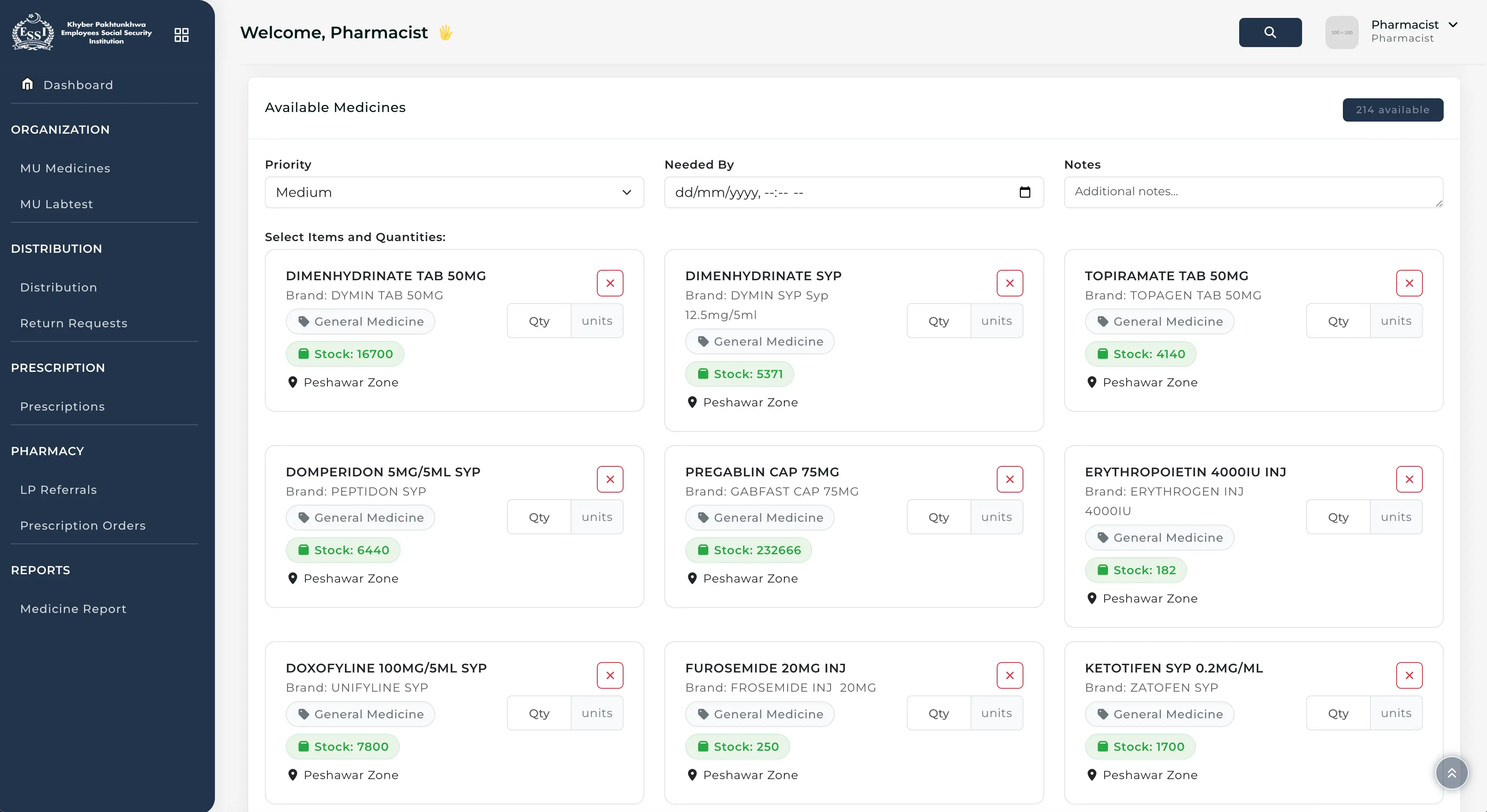
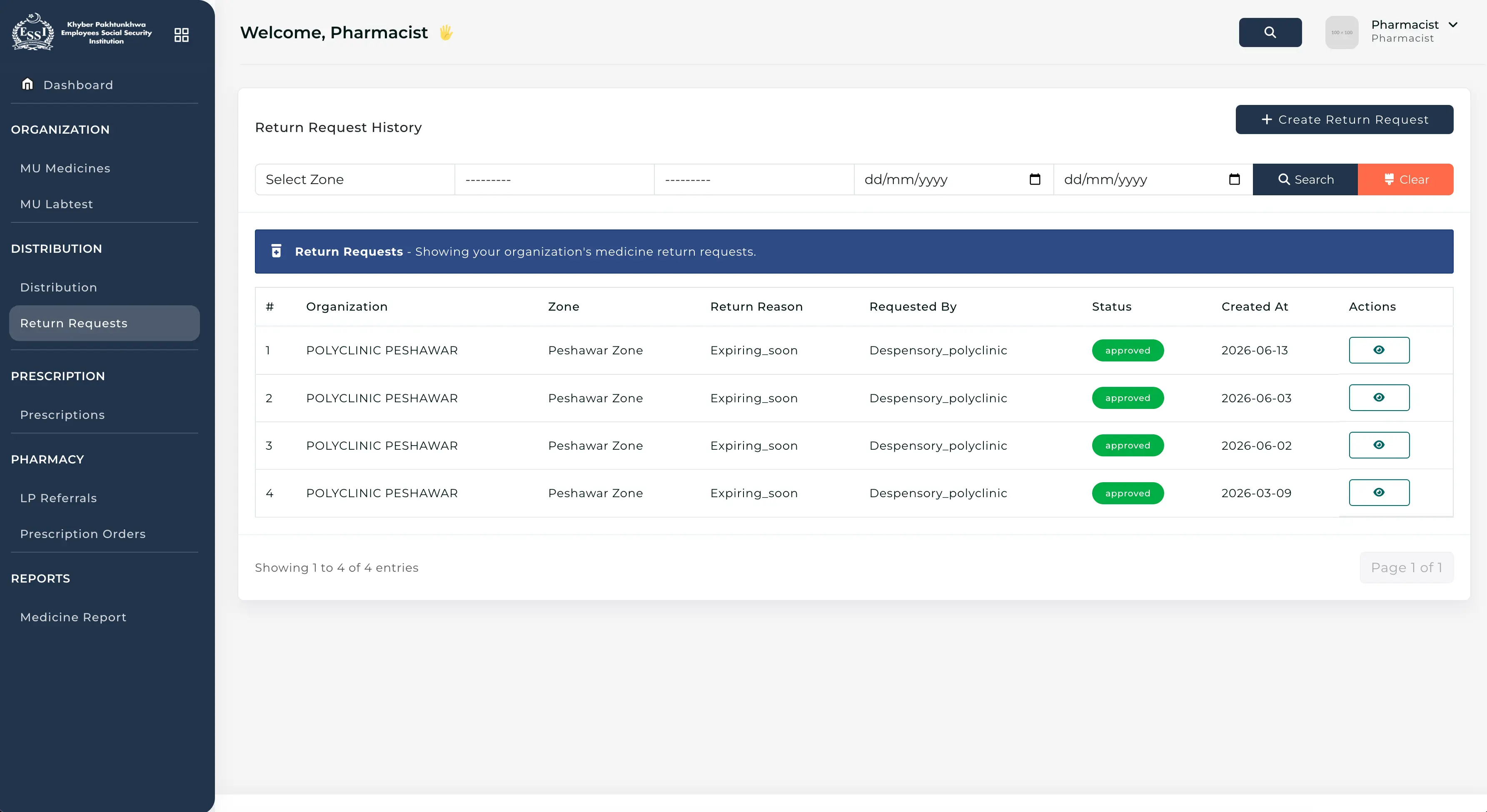
Browse super-admin console, pharmacy, lab, prescriptions and linked pharmacies.Glide through the live HMIS platform, from the super-admin console to pharmacy, lab, prescriptions and linked pharmacies.
Philosophy
Clear, accessible design for safe clinical workflows across every role.A user-centered design philosophy focused on clarity, accessibility and safe clinical workflows for doctors, pharmacists, lab staff and administrators.
Tokens
One clinical visual language across every hospital screen.A cohesive visual language that keeps every clinical screen consistent, accessible and trustworthy.
Type samples
More work
Government platforms, healthcare SaaS and AI products from our team.More of what our team designs and ships, from government platforms to healthcare SaaS and AI products.
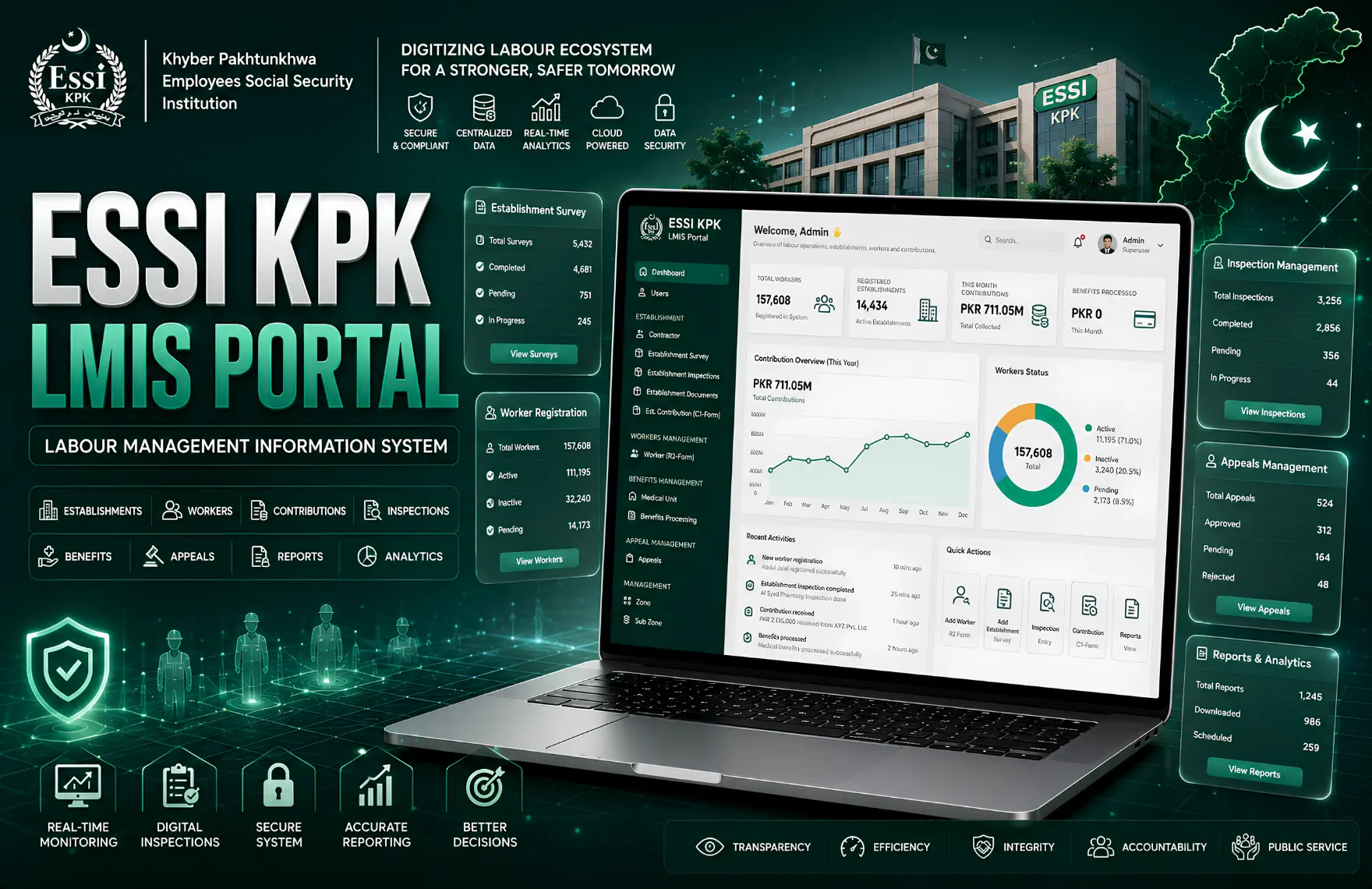 Government Platform2025LMIS, KPK2025
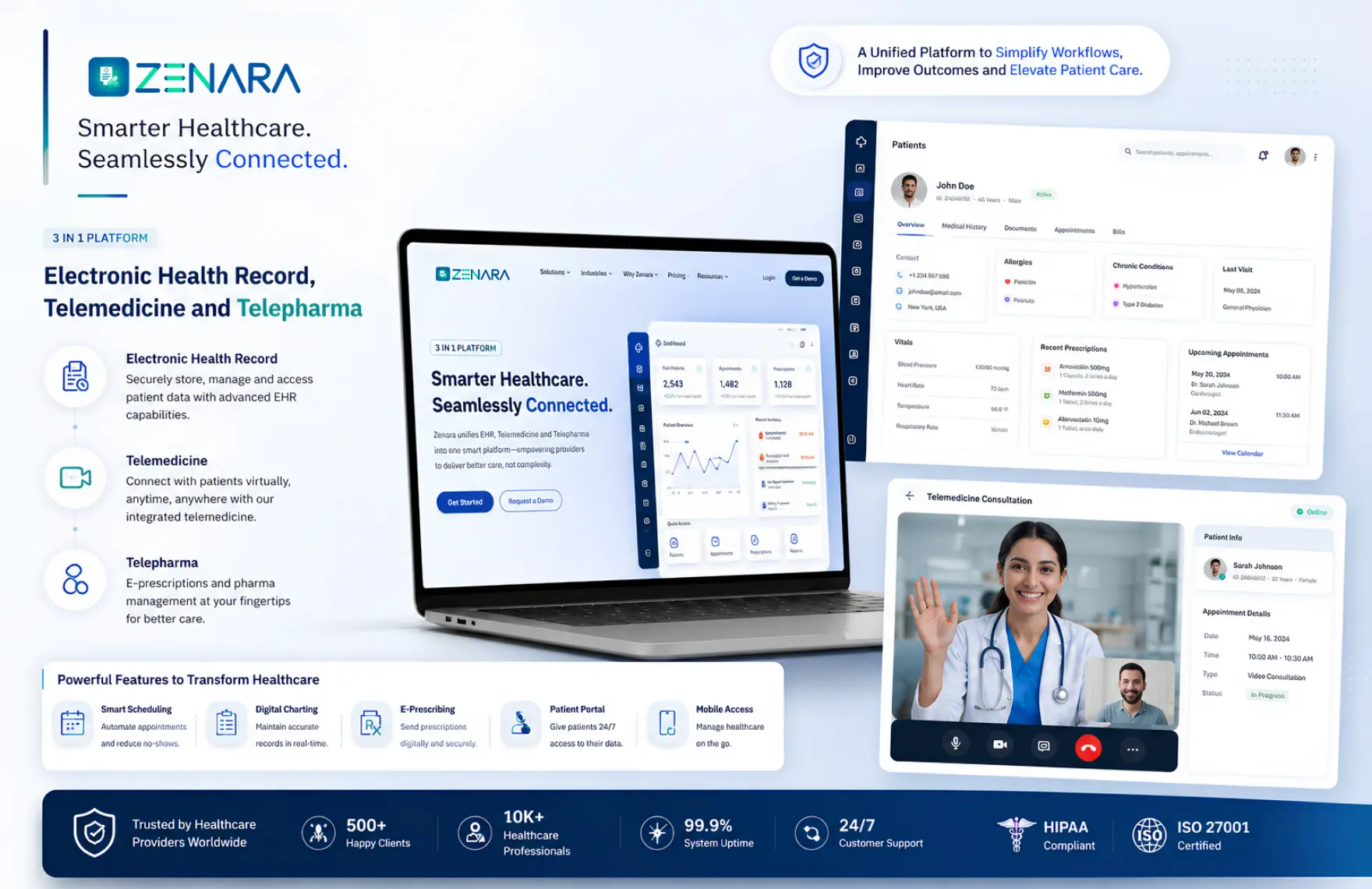 Web Platform2024Zenara Healthcare2024
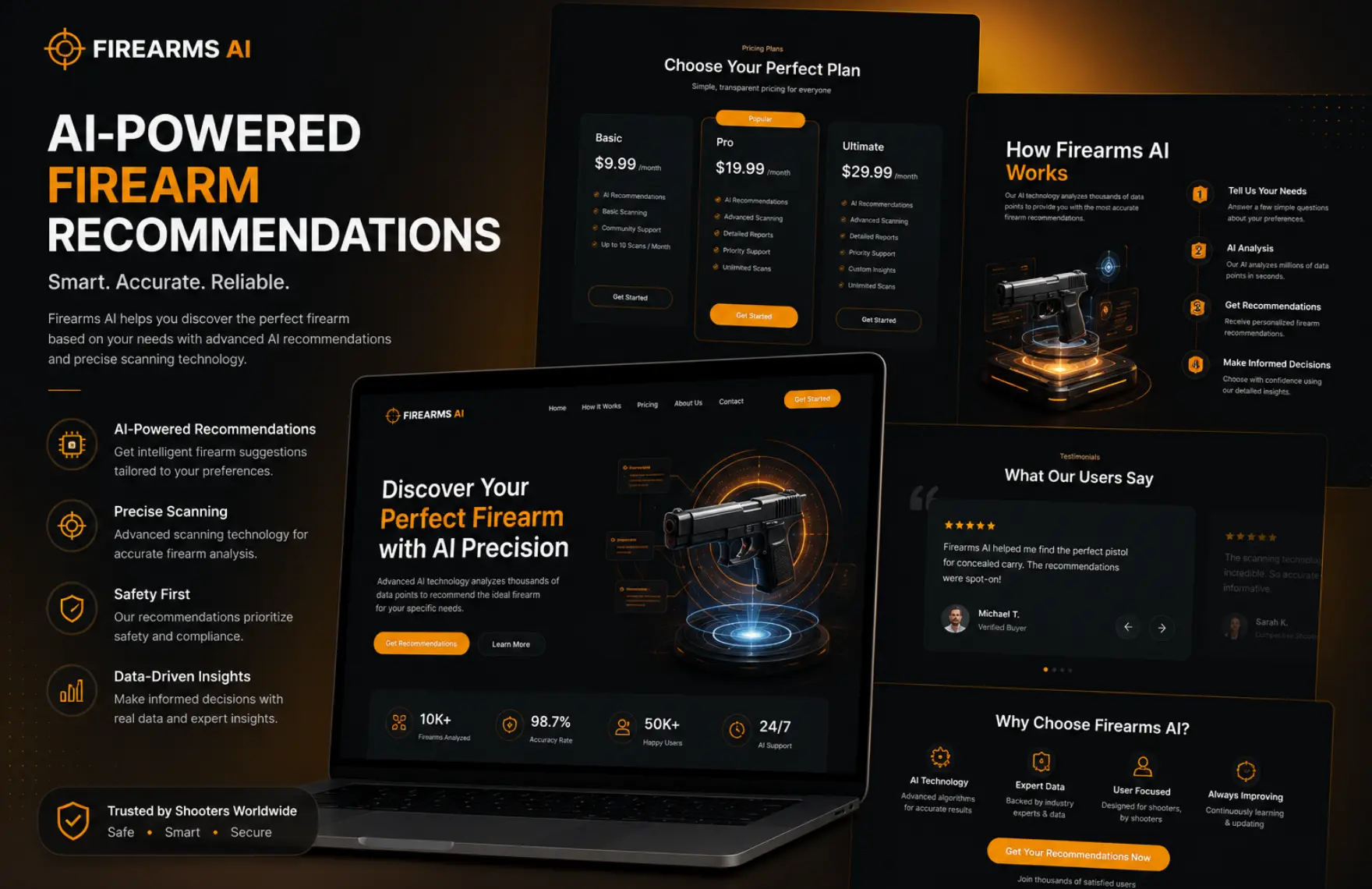 AI Platform2023GR1P, AI Fit2023